Feeds:
Posts
Comments

MYTH:  Owners of designated historic landmark buildings are unable to make any significant changes to their properties. 

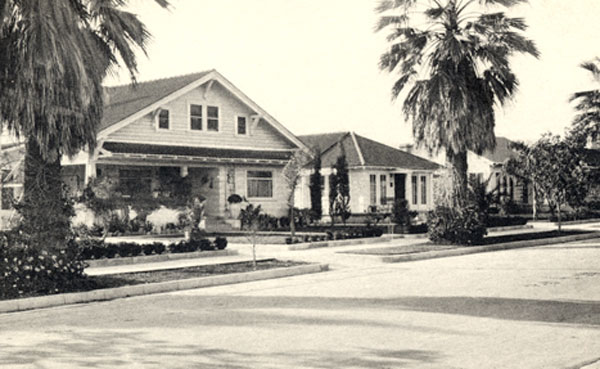
FACT:  Historic preservation laws are intended to manage change in a responsible way, not to prevent change.  The Secretary of the Interior’s Standards for Rehabilitation, a nationally accepted set of guidelines for evaluating change in historic structures, specifies only that the most significant, or “character-defining” features should be preserved, and new additions to a historic building should be compatible with the existing architecture.  These Standards do not require that every doorknob and light switch be saved.  Rather, they specify that historic features that are deteriorated should be repaired if possible – while allowing for replacement when the severity of damage leaves no other reasonable option.

Have you preserved any of your home’s “character defining” features? Tell us about them in the comments section below. We’d love to hear how you preserved your home and demonstrated that character counts!

This is the second article in a four-part series entitled May Monday Mythbusters. Check in with us again on Monday, May 21, when we explore the rights of property owners.

Photo courtesy of Frozencapybara.

MYTH:  Alhambra doesn’t have any buildings or neighborhoods that are important enough to be worth saving.

FACT:  In 1984, the City of Alhambra received a grant from the State of California to commission a historic survey and inventory of two of Alhambra’s many residential single-family neighborhoods.  This effort was intended as a first step toward making historic preservation an official part of Alhambra’s planning policy.  Although limited to two neighborhoods, the survey identified more than 600 Alhambra buildings as possessing historic or architectural significance, including several that were potentially eligible for listing on the National Register of Historic Places.

Our local heritage is represented in many forms:  mansions and modest bungalow courts; churches and commercial buildings; neighborhoods that once sprang up around the Pacific Electric Rail line or in the place of the disappearing vineyards and orange groves; Craftsman bungalows and Tudor cottages; Spanish Colonial Revival homes and Mid-Century Moderns; sandwich stands and neon signs.  Whether modest or grand, all of these are capable of possessing historic significance.  A complete inventory of all of Alhambra’s historic structures is desperately needed, so that our many hidden treasures can be identified, recognized and preserved for future generations.  It’s time to finish the process that was begun in 1984.

What are your thoughts on completing the survey Alhambra’s historic structures? What structures do you think should be included? Let us know in the comments section below.

This is the first article in a four-part series entitled May Monday Mythbusters. Check in with us again on Monday, May 14, when we explore what owners of historic landmark buildings can and cannot do to their historic properties.

Have you ever dreamt of seeing your house on the big screen? Ever wondered how location scouts choose a site for a movie or commercial? Have you ever questioned if you could earn some additional income through location filming?

At 7:00 p.m. on Thursday, May 31 at the Alhambra Civic Center Library (101 S. 1st Street), Alhambra Preservation Group will feature “Lights! Camera! Alhambra!” a presentation by Kris Bunting and Kristi Frankenheimer, location managers whose combined credits include more than 50 feature films and television shows. Kris Bunting was pivotal in securing an Alhambra home used in the filming of Long Time Gone, a soon-to-be-released movie starring Virginia Madsen. The hour-long presentation will include information on what film scouts look for in homes and locations, how you can make your house more attractive to scouts, what the range of compensation for homeowners is for filming, and how Alhambra can be more film-friendly in its policies and practices.

Alhambra is certainly no stranger to the silver screen. From the 1945 National Velvet starring Elizabeth Taylor and Mickey Rooney to the 1991 Father of the Bride starring Steve Martin to the 2005 Guess Who starring Ashton Kucher and Bernie Mac, Alhambra attracts film-makers looking for architecturally diverse homes and character-filled neighborhoods. Come and learn how your home can have a starring role in an upcoming television series or movie.

To RSVP please contact Alhambra Preservation Group at (626) 755-3467, e-mail us at info@alhambrapreservation.org or visit us on Facebook.

Photo courtesy of fauxto_digit.

All across our nation, Americans are actively engaged in efforts to save the places that make our communities special and unique.  In recognition of these many and diverse activities, the National Trust for Historic Preservation has, since 2005, declared the month of May to be National Preservation Month.  We invite you to join this year’s celebration here at home!

We are honoring National Preservation Month with a project designed to raise awareness about the need for adoption of an historic preservation ordinance in Alhambra.  Each Monday in May, we’ll post a new installment of our Mythbusters series.  Much of what passes for “information” on historic preservation is actually just rumor, speculation and myth.  We’d like to set the record straight, and we encourage you to use the factual information you will discover here to educate and inform your friends, neighbors and community leaders.

Each and every individual can make a difference in changing public policy.  If you care about the protection of Alhambra’s unique and irreplaceable buildings and neighborhoods, we invite you to join with us to make historic preservation a vital element of our city’s General Plan.

Check in with us again on Monday, May 7th for the first installment of May Monday Mythbusters.  You’ll be glad you did!

Imagine our surprise to receive a copy of this letter from an out-of-town guest who attended our March 15th screening of The Greenest Building.

Jeanne Wilkinson was so impressed with our organization and its mission, and so pleased that two of our civic leaders were in attendance at our meeting, that she sat right down and wrote a letter to tell them so.

Here’s what she said:

March 16, 2012

Dear City Manager Fuentes and Councilman Placido,

Thank you for attending the March 15 meeting on historic preservation in Alhambra.  I commend you both for wisely recognizing the profound value that historic preservation plays in protecting property values, promoting civic pride, and safeguarding Alhambra’s aesthetic appeal as a great place to live and do business.

I am a third-generation Alhambran. I attended both Ramona Convent and local public schools. Today, I am the chief financial officer for a multi-million dollar technology transfer firm in Bozeman, Montana which serves as a conduit between Montana State University, the U.S. Department of Defense and the private sector. Bozeman, like Alhambra, is a growing community.  It has a citizenry that is actively engaged in the cause of historic preservation and I should point out that investments made in historic preservation continue to pay huge dividends.

Our historic downtown and residential districts have won national accolades, cementing Bozeman’s reputation as one of the most livable communities in America.  Our local chamber of commerce there uses historic preservation as a selling point in attracting entrepreneurs and new businesses to the community. Historical preservation also has been an engine for our lively arts and thriving tourist economy.

Authenticity matters in today’s world.  I know that both of you recognize the fact that preserving Alhambra’s historic assets gives it a competitive advantage.  I could cite a long list of socio-economic studies showing that communities, which protect their heritage, are more likely to have thriving economies.

For me, Alhambra will always be a place that I proudly call home.  It is heartening to know that our civic leaders here have not lost sight of the qualities that make this community different from “Anytown USA.”  I strongly encourage you to keep working with those who advocate for historic preservation. You will never regret it. There is not a more dedicated group of citizens with vision in all of the San Gabriel Valley.

Sincerely yours,

Jeanne Wilkinson

Thank you, Jeanne, for this letter. We appreciate you taking the time to put your thoughts down on paper and are pleased that you were able to attend this APG event. Best of luck with your ongoing preservation efforts in Bozeman. We look forward to seeing you during your next visit home to Alhambra!

Photo Courtesy of Shenzhenstuff.com

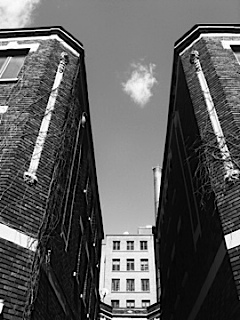
April is right around the corner and, with it, the centennial of the tragic sinking of the RMS Titanic on April 15, 1912. There are a few events taking place here in Southern California to mark the 100th anniversary of this historic event. You may want to consider attending one of them.

> The Steamship Historical Society of America will host a commemorative event on April 14 at the Queen Mary in Long Beach. The event includes a luncheon aboard the Sapphire Princess, a Titanic film festival and late-night candlelight vigil.

> On April 12, the Pasadena Museum of History will feature an illustrated lecture by Kevin Jones, curator of the Fashion Institute of Design & Merchandising Museum, entitled Ad-dressing the Titanic: Appearance and Identity in 1912. The lecture will explore the four categories of travelers on the ill-fated ship: First Class, Second Class, Steerage, and Crew.

> If you don’t mind the drive, then you may want to consider attending the San Diego Natural History Museum’s Titanic: The Artifact Exhibition, taking place now until September. The exhibition showcases 200 artifacts retrieved from the wreckage site, Titanic-themed films, and magnificent re-creations of the ship’s interior. Special events are planned for the centennial week of April 9 – 15.

> Interested in viewing homes that were being built when the Titanic took her maiden voyage? Then plan on attending Bungalow Heaven’s 23rd Annual Home Tour on April 29. Eight Pasadena homes will be included on this self-guided tour.

> Grab some popcorn and Junior Mints! On April 14, the Los Angeles Conservancy presents a special screening of the 1974 classic film Chinatown in partnership with the American Planning Association’s 2012 National Planning Conference in Los Angeles.

> Spring is a great time of year for a stroll, and the Los Angeles Conservancy’s monthly walking tours is the perfect way to simultaneously enjoy the warmer weather and discover some amazing architecture.  Eight regularly scheduled tours range from Angelino Heights to Union Station to Downtown Modern Skyline.

Will you be attending any events in April? We’d love to hear how you’ll be spending this first full month of Spring.

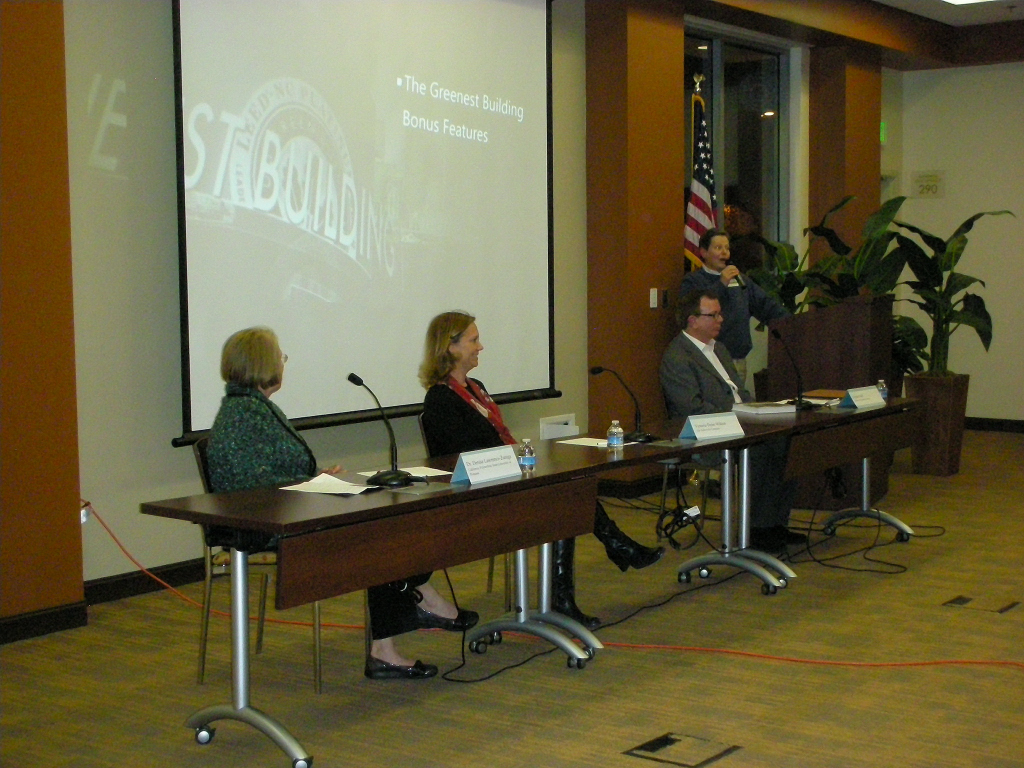
APG President Christine Olson introduces the film "The Greenest Building."

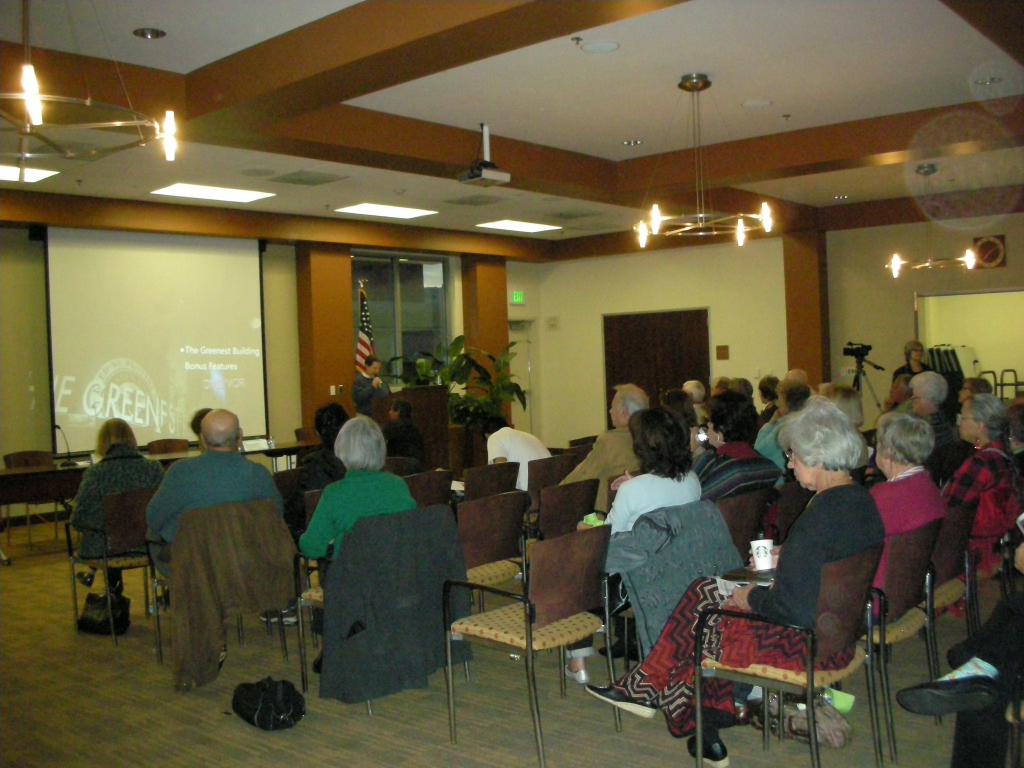
On the evening of March 15, Alhambra Preservation Group screened the award-winning document The Greenest Building at the Alhambra Civic Center Library to a crowd of community members and City officials including Councilmember Steve Placido and City Manager Julio Fuentes.  The award-winning film explored the question “Is a new building the most sustainable choice?” with noted preservationists, architects and green building consultants discussing the environmental impact of demolition, the needs of communities to reflect a “sense of place,” and the proposition that the greenest building may, in fact, be the one that is already built.  The film showcased examples of creatively re-purposed historic buildings that have been upgraded to LEED standards, serving their owners and occupants as 21st Century workplaces while preserving the unique character of their surrounding communities.

Event panelists field questions from attendees.

Following the film, a panel of experts including Dr. Denise Lawrence-Zuniga of the California Polytechnic State University at Pomona’s School of Architecture; Victoria Deise Wilson of the Ratkovich Company; and, Peyton Hall of Historic Resources Group fielded questions from the event attendees. Questions and discussion ranged from an explanation of the Mills Act, which, if Alhambra were a participant, would result in property tax reductions for owners of historic homes to a discussion about the need for grassroots efforts, “Preservation organizations are integral to ensuring that communities retain their historic buildings and maintaining that ‘sense of place’ that is so important to residents,” stated panelist Dr. Denise Lawrence-Zuniga, during the panel discussion.

Another recurring theme discussed in the film was that buildings are the physical manifestations of memories and stories. Are there any Alhambra buildings that evoke memories for you? Share your memories with us. We’d like to hear which of Alhambra’s buildings are included in your own life stories.

Alhambra Preservation Group’s spring event will take place in late May and will focus on the growing resurgence of filming at Alhambra homes and locations. Stay tuned for more details regarding this upcoming event.

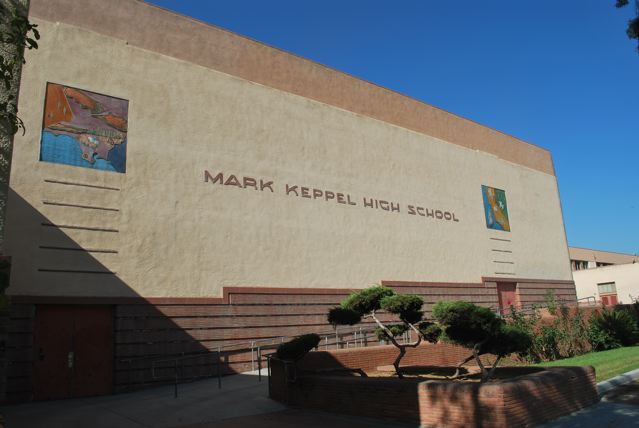
This Sunday, March 18, between 11:30 a.m. and 4 p.m., the Los Angeles Conservancy will explore the work of renowned artist and native son, Millard Sheets, with a tour of some of his most important examples of work in the Pomona – Claremont area. As a highly influential artist during the mid-20th century, many of Millard Sheets’ best-known murals can still be seen throughout Southern California. But did you know that you can view three of Millard Sheets’ earliest murals here in Alhambra at Mark Keppel High School?

In the late 1930s, as Alhambra’s Mark Keppel High School was being built, Millard Sheets created three exterior enamel and steel murals, which remain today. The three murals depict the history and culture of early California. One mural showcases the entire state of California – a lumberjack cuts down a redwood tree, a cowboy gallops in on a white horse from the east, two miners pan for gold, a large ship sails and a farmer harvests oranges. The second mural features Los Angeles County and includes the San Gabriel Mountains, the San Gabriel mission, a cattle ranch and vaquero and Long Beach and San Pedro harbors. A third, the largest, crowns the entrance to the schools auditorium and shows three of the groups that colonized and populated early California: the Spanish conquistadors, the Catholic missionaries and the American pioneers.

Millard Sheets was a native California artist who grew up in the Pomona Valley. He attended the Chouinard Art Institute in Los Angeles and showed remarkable early promise. While still a teenager, he was elected into membership in the California Water Color Society. He received national and international recognition for his painting and was recognized in Southern California as the leading figure and driving force behind the California Style watercolor movement.

Painting was only one aspect of Sheets’ long and varied art career. Through his teaching at Chouinard Art Institute, Otis Art Institute, Scripps College and other institutions, he taught hundreds of artists how to paint and guided them into careers in art. During the Great Depression, he helped to select and hire artists for the Public Works of Art Project, the first art project of Roosevelt’s New Deal. In later years he worked as an architect, illustrator, muralist, and printmaker. His career as architect and muralist reached its zenith in the 1950’s, when he was employed by Howard F. Ahmanson, Sr. to design dozens of branch offices of Home Savings of America throughout Southern California.

This Los Angeles Conservancy event provides a unique opportunity to visit some historic sites, including Sheets’ former studio. But, don’t forget to make a stop at Mark Keppel High School before heading out to Pomona-Claremont on March 18. It’s a great opportunity to see some of Sheets’ work up close and personal here in Alhambra.

Note: Mark Keppel High School is located at 501 East Hellman Avenue, Alhambra, CA 91801. 

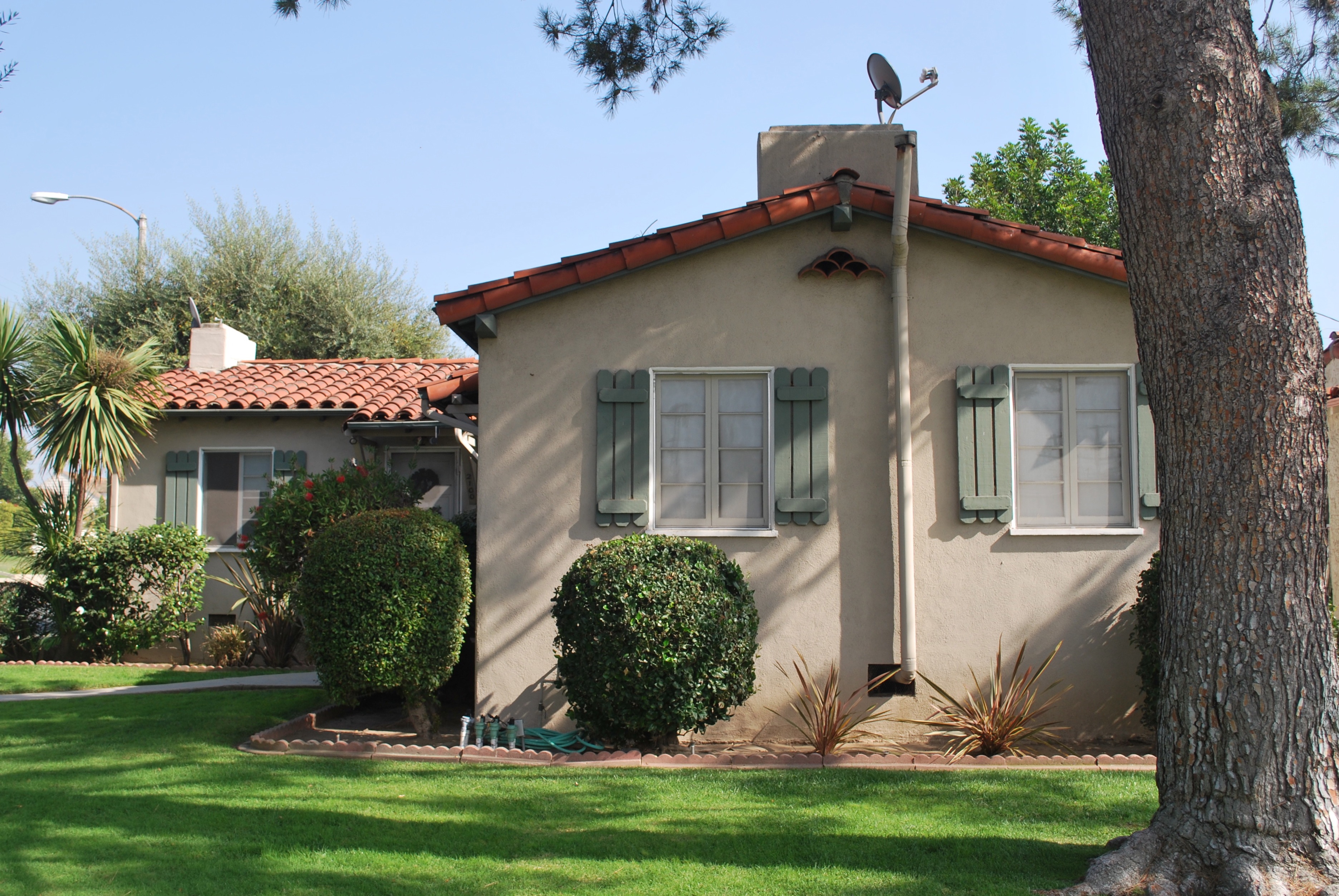
A 1937 Spanish-style garden apartment complex located in southwestern Alhambra was among four properties honored with Alhambra Preservation Group’s 2011 Heritage Home Awards for historic preservation.  “Presenting a Heritage Home Award to a multi-unit property is something new for Alhambra Preservation Group,” said Christine Olson, APG President. “We are pleased to present this property’s owners with this award, in recognition of their continued care and preservation of Alhambra’s architectural history.”

The apartments are located in the Granada Place Tract, which was developed as a residential neighborhood in the 1920s—the heyday of the nearby Midwick Country Club. The Pacific Electric Railway line, with daily passenger service from Los Angeles to San Bernardino, ran close by, traversing the center of Ramona Road, which is now the San Bernardino Freeway.

Atilio and Viola Guardia were the first owners of this apartment complex. The son of Italian immigrants, Atilio had grown up on a farm in Illinois. He and Viola came to Southern California in the mid-1920s, and Atilio was employed as head gardener on the Sierra Madre estate of Grace Hall, an elderly widow.  While living in a cottage on the estate, they saved their money and, in the Fall of 1937, purchased a vacant lot in Alhambra and hired a local contractor, Lindsia Elkanah “Caney” Dowell, to draw up plans for a four-unit garden apartment complex. Each of the four apartments had one bedroom and one bathroom. Construction on the small 600-square foot apartments, which were designed in the Spanish style with terra cotta roof tiles, fireplaces and casement windows framed by decorative wood shutters, was completed in early 1938. Over the next 40 years, the Guardias rented to an assortment of hard-working people—laundry drivers, waiters, stenographers, warehousemen, aircraft workers—all of whom called these modest, but attractive, apartments home.

The current owners purchased this apartment complex in the early 1980s.  Having moved to Alhambra in the 1970s and living in the nearby Midwick Tract, they had often admired this apartment complex as they drove their children to school. When the complex went on the market in 1983, they jumped at the chance to purchased them. These new owners already possessed a well-developed appreciation for historic architecture. (Others among their family have, for many years, owned and maintained  an early Los Angeles landmark, El Milagro Market and Albion Cottages, a store and five houses, built circa 1870 for Southern Pacific Railroad workers.)  Since 1983, they have maintained the apartments conscientiously, restoring the original wood casement windows and mitigating extensive termite damage and dry rot throughout the complex. Among other benefits, their tender loving care of the property has resulted in excellent landlord-tenant relationships—some of which have lasted for decades.

Is a new building the most sustainable choice? Buildings are our most significant consumer products. Yet, every day, these structures are demolished—often in the name of environmental responsibility.  Over the next 20 years, Americans will demolish over one-third of our building stock (over 82 billion square feet) in order to replace seemingly inefficient buildings with energy-efficient “green buildings.” Is demolition in the name of sustainability truly the best use of natural, social and economic resources?

The award-winning film, The Greenest Building explores this question with noted preservationists, architects and green building consultants discussing the environmental impact of demolition, the needs of communities to reflect a “sense of place,” and the proposition that the greenest building may, in fact, be the one that is already built.  The film showcases examples of creatively repurposed historic buildings that have been upgraded to LEED standards, serving their owners and occupants as 21st Century workplaces while preserving the unique character of their surrounding communities.

Alhambra Preservation Group will present a screening of The Greenest Building, followed by a discussion by a panel of experts from the fields of architecture, historic preservation and urban planning.  The screening and discussion will take place at 7:00 p.m. on Thursday, March 15 in Reese Hall at the Alhambra Civic Center Library, located at 101 S.First Street. All are welcome to attend; the event is free and open to the public. Light refreshments will be provided. Ample parking is available, at no charge, in the library’s underground parking structure.

For more information about the showing of The Greenest Building or to RSVP, please call (626) 755-3467.

* Photo Courtesy of Alhambra Preservation Group.