Feeds:
Posts
Comments

By now, everyone is aware that November 6th is Election Day!  Here in Alhambra, we have one City Council seat in contention.  Elizabeth Salinas and Steve Placido are running against one another, each seeking to represent District 4 on the Council over the next four years.

We at Alhambra Preservation Group wanted to engage with the candidates to learn about, and to inform Alhambra voters of, their positions on historic preservation.  In this spirit, we invited Dr. Placido and Ms. Salinas to sit down with us a few weeks ago for a brief interview to share their views on issues related to our own mission.

We videotaped both interviews, which consisted of their individual responses to five questions posed by APG members and have made them available to the public on our YouTube channel.

We hope that you’ll check them out and get to know our 2012 City Council candidates just a little bit better!

APG’s goal for this project was to add to the availability of reliable and accurate information on the candidates’ positions that will help all of us to make an informed decision at the ballot box.  We believe that we have been successful in this and we’re grateful to both of our City Council candidates for taking the time to participate and to share their positions with the voters.

Most importantly, don’t forget to vote on November 6th!  Every vote matters!

Photo courtesy of creativedc.
Make the most of your APG membership!  Every year in the Fall, Alhambra Preservation Group hosts a special “members-only” activity — a free guided tour of a Southern California architectural treasure.

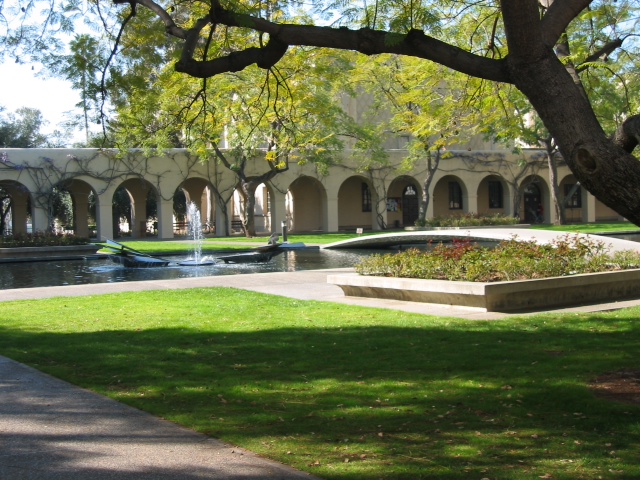
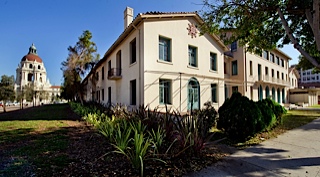
This year we have a real treat in store for our members — a two-hour walking tour of the Caltech campus in Pasadena, scheduled for Friday morning, November 9th from 10 a.m. to noon.  If you’re not already a member of APG, you can join today and request to have your name added to our list of tour-goers.  A maximum of 30 participants can be accommodated on our private “behind the scenes” tour of the campus, but there are still spots available.

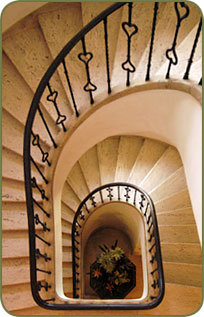
After a brief visit to the Caltech faculty club, the renowned Athenaeum designed in 1931 by Gordon Kaufmann, the tour will explore several original buildings on campus, some of which date to 1910.  Participants will see how architect and master planner Bertram Goodhue, using “shaded portals, sheltering walls and Persian pools,” set the tone for a campus of great beauty — so that the scientists and engineers working and studying here could become more aware of the aesthetic values of life.

Our tour guide will be Romy Wyllie, author of the foremost reference work on the history of the Institute, Caltechs Architectural Heritage, from Spanish Tile to Modern Stone, published in 2000.  A certified interior designer and member of the International Interior Design Association, Wyllie has taught architectural history and interior design.  She is co-founder and chairman of the Caltech Architectural Tour Service.

The Caltech tour is a fairly strenuous walk, covering a distance of about 1.3 miles, and it includes flights of stairs.  Comfortable walking shoes are recommended.  We regret that strollers, walkers and wheelchairs cannot be accommodated on this tour.

The deadline for registration is Wednesday, October 31.  Call today to learn more, or to get your name on the list of tour-goers:  (626) 755-3467.

Photos courtesy of Caltech.

In your mailbox last week, you probably noticed a letter from Alhambra Preservation Group containing information about Alhambra Preservation Group’s (APG) 2013 membership campaign.

If you haven’t done so already, we invite you to take a moment, read the letter and consider joining Alhambra Preservation Group. Established in 2003 and incorporated as an independent nonprofit organization in 2006, APG is uniting a growing number of Alhambra households, business and community leaders in a forward-thinking mission of protecting and celebrating Alhambra’s historical, architectural and cultural resources.

Alhambra Preservation Group offers membership opportunities at three levels, each with its own associated benefits. We invite your participation and welcome your support.  In exchange, we can promise you a full calendar of fun and educational activities, opportunities to meet neighbors, discover new friendships and, most importantly, to deepen and “grow” your investment in Alhambra—our shared “home town.”

If for some reason you didn’t receive our membership information, please give us a call at (626) 755-3467 or send us an e-mail at info@alhambrapreservation.org!

Photo courtesy of slgckgc.

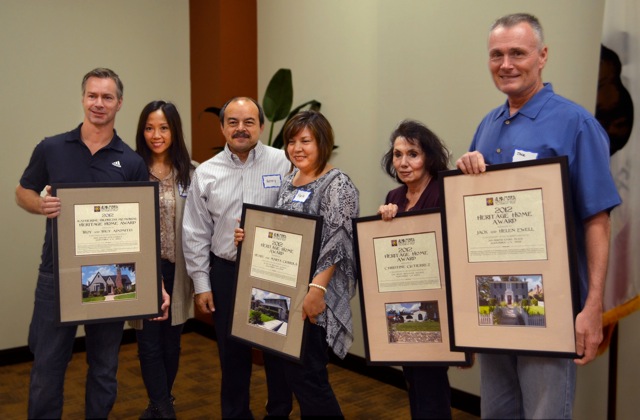
The recipients of APG’s 2012 Heritage Home Awards pose with their certificates.

Alhambra Preservation Group (APG) presented its 2012 Heritage Home Awards on Thursday, October 11 at a ceremony in Reese Hall of the Alhambra Civic Center Library. The event was attended by more than 50 Alhambra residents.

The evening included presentations on each of the four featured residences, showcasing the distinctive historical and architectural details of each and bringing to light some of the long-forgotten history on the houses and the people who once lived in these homes. “APG’s annual Heritage Home Awards shine a spotlight on Alhambra’s rich architectural history,” stated Christine Olson, Alhambra Preservation Group’s President. “Each year, APG proudly recognizes several homes, their current owners and the sensitive restoration work that has contributed to the preservation of these gems.”

This year’s four homes are located throughout Alhambra in the Mayfair Tract, the original Alhambra Tract, the Midwick Tract and a little-known area of land in Alhambra originally named the Wiesendanger Tract after a Los Angeles real estate magnate. The honored homes included the following architectural styles, which are prevalent in Alhambra – Prairie-styled Arts and Crafts, Spanish Colonial Revival, English Tudor Revival and Colonial Revival.

Look for a four-part series featuring the honored homes to appear here monthly beginning in December 2012.

Alhambra Preservation Group (APG) will present its 2012 Heritage Home Awards at its fall event. At 7:00 p.m. on Thursday, October 11, four local property owners will be recognized for their hard work and dedication to the preservation of Alhambra’s built environment. The event will take place in Reese Hall at the Alhambra Civic Center Library, located at 101 South First Street in Alhambra. “These homeowners have made a considerable investment in our community and its history by maintaining the character of their historic homes,” said Christine Olson, APG President. “We are proud to honor their efforts.”

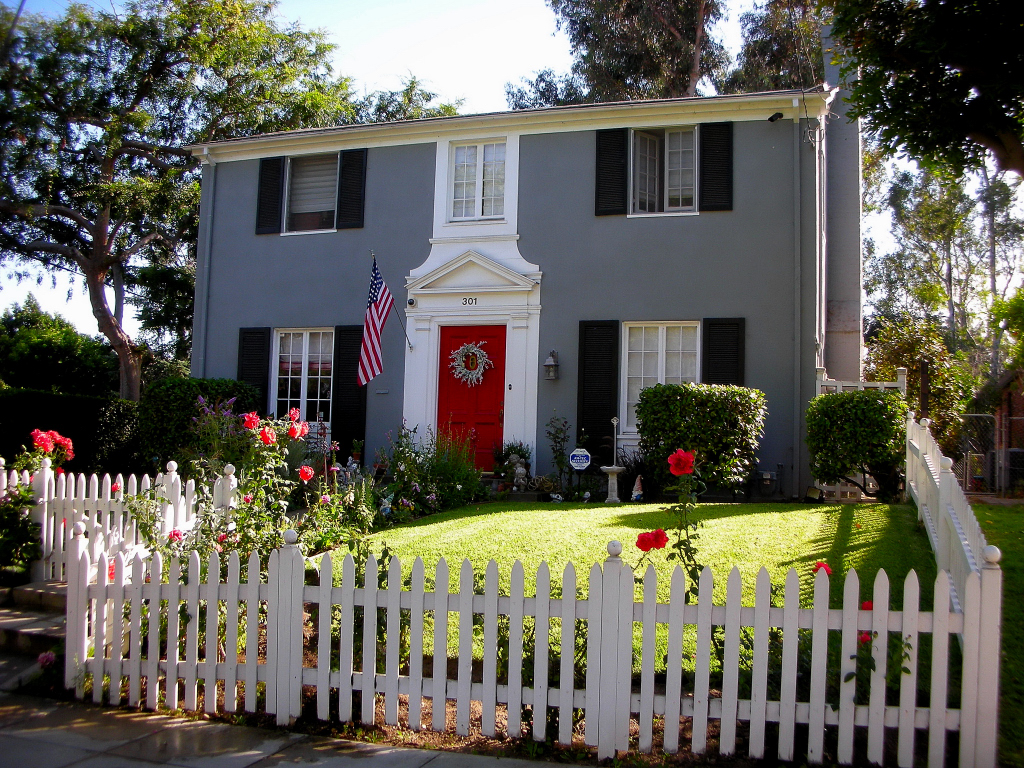
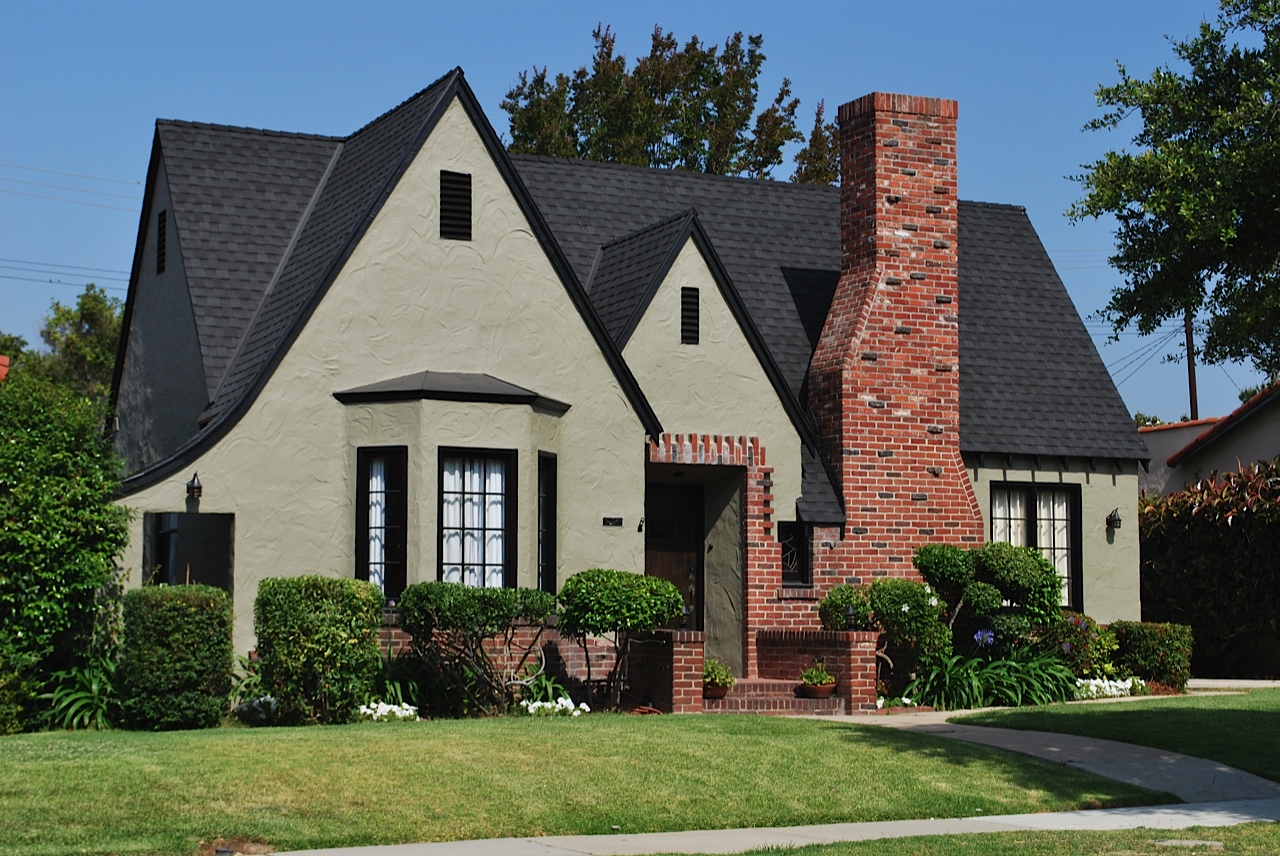
This year’s Heritage Home Award winners showcase Alhambra’s diverse architecture and include a 1929 Tudor Revival, a Colonial Revival home constructed in 1935, a 1910 Arts and Crafts home in the Prairie Style, and a Spanish Colonial Revival constructed in 1932. Each of these tells stories of the lives of those connected with them: of the Alhambra High School principal who lived in the first home built in the Mayfair Tract; the high-flying real estate magnate whose land holdings were extensive but who, in the wake of scandals and lawsuits, died friendless and penniless; and the family of original owners who left a time capsule buried in their basement.

This event is free to the public, and all are welcome to attend. Light refreshments will be served after the presentation, and ample parking is available in the library’s underground parking structure. APG has presented the Heritage Home Awards annually since 2008, in keeping with its goal of raising public awareness about the ways in which historic architecture contributes to Alhambra’s economic and cultural vitality.

The Alhambra Preservation Group was founded in 2003 by Oscar Amaro and Katherine Hildreth and incorporated as a 501(c)(3) non-profit organization in 2007. The membership shares the belief that Alhambra’s unique history is embodied in its buildings and that Alhambra’s historic structures provide a real and tangible link to its history. For more information on APG, please call (626) 755-3467 or like us on Facebook at http://www.Facebook.com/alhambrapreservation.

This home is one of four houses to be recognized at the Heritage Home Awards on October 11.

Mark your calendars now for Alhambra Preservation Group’s Fall event, at which the organization will present its 2012 Heritage Home Awards.  APG has presented this award annually since 2008, in keeping with its goal of raising public awareness about the ways in which historic architecture contributes to Alhambra’s economic and cultural vitality.

At 7:00 p.m. on Thursday, October 11, four local property owners will be recognized for their hard work and dedication to the preservation of Alhambra’s built environment. The meeting will take place in Reese Hall at the Alhambra Civic Center Library, located at 101 South First Street.

Everyone is welcome to attend and to learn about the history of four distinctive Alhambra homes, and the efforts of their owners to preserve and maintain them in a way that honors their connection to the people, events and patterns of history that have shaped this community.  Refreshments will be served.  The event is free and open to the public.

To learn more about Alhambra Preservation Group, call (626) 755-3467 or visit our Facebook page.

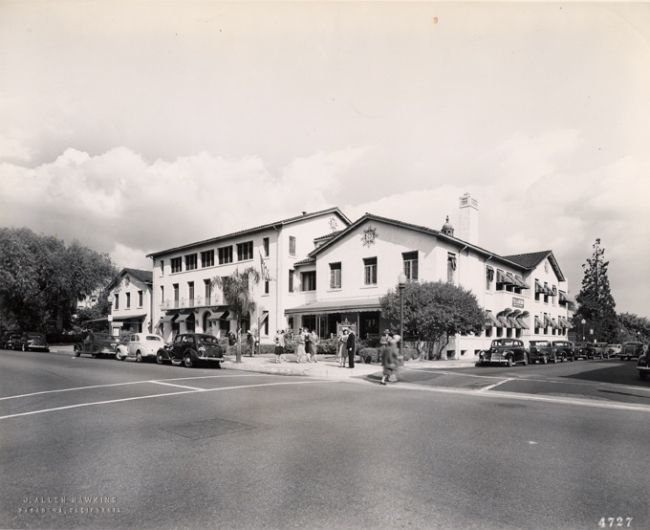
The Pasadena YWCA building, left vacant and neglected since the non-profit organization sold it to a Hong Kong investor in 1996, will soon have a new lease on life.  After years of conflict between the owner and the City of Pasadena over the deteriorating condition of the National Register-listed building, the City acquired the property at 78 North Marengo in 2010 by invoking the law of eminent domain.  Last week, the City issued a Request for Proposals from qualified developers for rehabilitation of this important landmark structure in the heart of Pasadena’s civic center.

Built in 1921 as a YWCA center and residence for working women, the facility was designed by the famed Julia Morgan, California’s first licensed female architect.  Renowned for her work on Hearst Castle in San Simeon, Morgan designed more than 700 buildings throughout the state, including the former Herald-Examiner building in downtown Los Angeles, the Asilomar Conference Center in Pacific Grove, and Mills College in Oakland.

Two free tours of the iconic Pasadena YWCA building will be offered this week, on Thursday evening, July 19 and Saturday morning, July 21, marking the first time the property will have been open to the public in several years.  Among the volunteer tour guides will be APG’s own Board President, Chris Olson, who had an office in the building during the 1980s.  Each event will consist of two parts:  an on-site tour of the facility (78 North Marengo Avenue, at Holly Street); and a subsequent presentation and comment session in the Pasadena City Council Chambers, at 100 North Garfield Avenue.  Thursday’s tour goes from 6:00 p.m. to 7:00 p.m.; Saturday’s goes from 9:00 a.m. to 10:00 a.m.

Alhambra Preservation Group members and friends are invited to attend — and to witness firsthand — what a difference can be made by the inclusion of a preservation element as a vital part of a city’s general plan.  This is historic preservation in action!

Photos courtesy of J. Allen Hawkins and the Pasadena Star News.

MYTH:  Historic preservation only benefits affluent communities. 

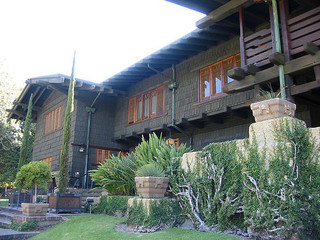
FACT:  The purpose of historic preservation is to accurately reflect and celebrate the unique story of a community and its people through its built environment.  Our work as preservationists is guided by the American principle of diversity, and therefore the full range of the American experience is reflected in our historic landmarks.  From the elegant Gamble House in Pasadena, designed by the Greene Brothers as the retirement residence of wealthy Midwesterners, to the modest Ralph Bunche house in South Los Angeles, the boyhood home of the first African-American winner of the Nobel Peace Prize, to the Watts Towers of Simon Rodia – all are irreplaceable historic landmarks that contribute to our understanding of ourselves as a people with a common heritage.

What’s more, in almost every case, official landmark designation helps to increase property values.  A recent study in New York City demonstrated that, in the nearly five decades since the establishment of the Landmarks Commission in 1965, property values in historic districts are “unfailingly higher than in comparable, non-designated parts of the city” (Anthony M. Tung, former New York City Landmarks Commissioner, author of Preserving the World’s Great Cities).

A similar study in Canada, conducted by Dr. Robert Shipley, evaluated the economic effect of historic designation on individual properties.  Over a 20-year period in the province of Ontario, more than 2,700 individual properties received official designation under the Ontario Heritage Act.  Professor Shipley found that these properties were more saleable, better able to resist downturns in the real estate market, and increased their value at least as well or better than the average property values in their communities.

Alhambra needs a planning policy that incorporates historic preservation!  We invite you to ask your city council members – and candidates for that office – about their position on this important issue.

This is the fourth and final article in a month-long series entitled May Monday Mythbusters where we explored some of the myths surrounding preservation. We hope you have enjoyed this educational series and have learned a bit more about why preservation makes cents!

Photo courtesy of ercwttmn.

MYTH:  Historic preservation is a violation of the rights of property-owners.  It’s “un-American.”

FACT:  This myth just doesn’t hold up under close scrutiny.  Historic preservation laws do not infringe on private property rights any more than laws that have long been enforced in communities throughout our nation.  Although we might like to believe that private property rights reign supreme, the reality is that the U.S. Constitution delegates the authority to local governments to regulate the ways in which private property may be used.  Zoning requirements often restrict property owners from building apartment complexes in single-family residential neighborhoods.  In some communities, height limitations prevent or restrict structures over two or three stories.  Density restrictions limit the number of dwelling units that can be constructed in a multiple-unit building.  Owners of condos may be prevented from owning pets, washing cars in the driveway, painting the exterior in unapproved colors, or installing a storage shed on an exposed balcony.  These limitations are far more stringent than historic preservation laws, but they are commonly accepted clauses in C C & R (Covenants, Conditions and Restrictions) documents.  Finally, we should all be glad that laws are firmly in place which prevent our neighbors from operating a toxic waste dump or building a skyscraper on the other side of our shared property line.

What are your thoughts on the rights of homeowners and preservation of historic resources? Let us know in the comments section below.

This is the third article in a four-part series entitled May Monday Mythbusters. Check in with us again on Monday, May 28, when we explore the benefits of historic preservation.

Photo courtesy of Mr. T in DC.